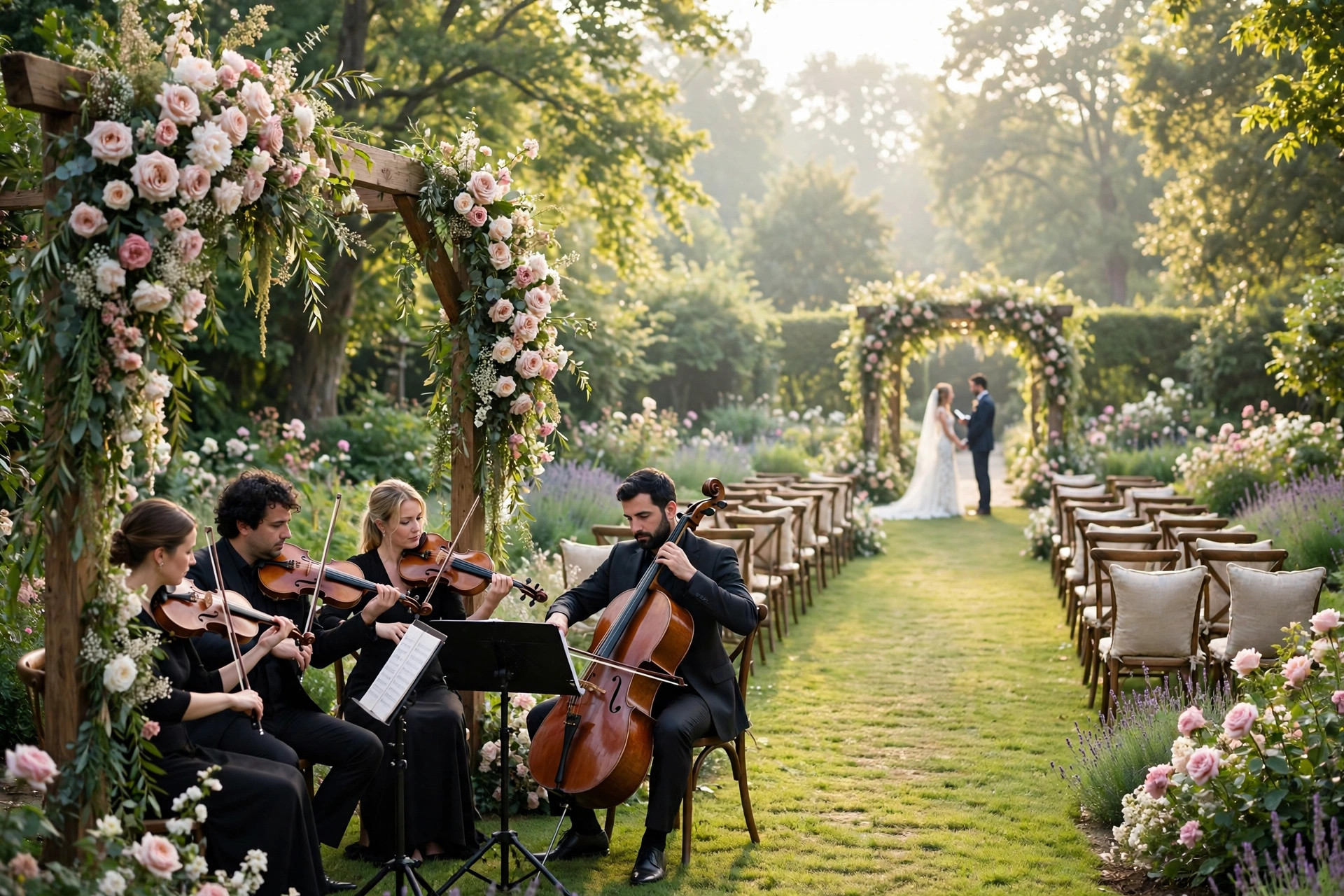
Couples spend months picking a first dance song and about ten minutes on ceremony music — and then the ceremony is the part everyone remembers. The music playing while guests sit down, while you walk in, and while you walk back out as a married couple sets the emotional tone for the entire day. The good news: you only need to make a handful of choices, and each one is simpler than it looks.
The three moments that need music
Think of the ceremony in three parts. The prelude is the 20–30 minutes of background music while guests arrive and find seats — gentle, familiar, and low enough that people can still talk. The processional is the walk itself: the wedding party, then you. This is the one song that matters most, so pick something with a clear, steady pace you can actually walk to. The recessional is the celebration on the way back out — upbeat, joyful, and loud enough to match the applause. If your ceremony includes a unity moment, a candle lighting, or a reading, that is a fourth, optional slot: one quiet song, kept short, so the moment stays a moment instead of becoming a concert.
How to pick songs that actually fit
Start with tempo, not taste. A processional song needs a walking beat — if you have to hurry or shuffle to keep up with it, it is the wrong song, no matter how much you love it. Next, check the lyrics. A love song that is actually about a breakup is a classic ceremony mistake, and it happens more often than anyone admits. Instrumental versions solve both problems at once: they keep the melody you love, drop any awkward lyrics, and sit beautifully under vows and readings. Finally, test the length. Most walks down the aisle last 30–90 seconds, so your DJ or musician should know exactly where to start the song and where to fade it — you do not need to play all four minutes of anything.
Live musicians or your DJ?
Both work, and the right choice depends on the room. A string quartet or a solo guitarist sounds gorgeous in a church or a garden, and it photographs beautifully. A DJ handling ceremony sound is simpler and more flexible: one setup, one person cueing every song, and an easy handoff into cocktail hour without moving gear or musicians between rooms. What matters most is not who plays, but who is in charge of the cues — someone needs to know when the doors open, when the processional starts, and when to hit the recessional the second you are pronounced married. Ask whoever handles your ceremony music how they take those cues, and whether they have a backup plan if a speaker or an instrument has an issue. If ceremony music is not part of your reception package, ask about it as an add-on early, while the schedule can still be built around it.
The Chicago part: rooms, gardens, and weather
Chicagoland ceremonies come with their own sound quirks. Big stone churches in the city carry sound beautifully — a single acoustic guitar can fill one — while a breezy garden in Evanston or a lakeside spot near the lakefront can swallow quiet music whole, so outdoor ceremonies need real speakers, not a phone on a table. If your ceremony and reception are in different places, confirm who moves the music between them and how long that move takes. And if you are planning an outdoor ceremony anywhere in Chicagoland, have an indoor music plan ready for rain or wind; the songs should work just as well inside, because the weather will not ask your permission.
The straightforward take
Pick three songs: one gentle song for seating, one steady song for walking in, and one joyful song for walking out. Test them at walking pace, check the lyrics, and put one person in charge of the cues. That is the whole job — and it is the difference between a ceremony that feels thrown together and one that feels like a movie scene. Our wedding package is $995 for 5 hours — professional DJ + MC, sound, basic lighting, custom playlists, and live requests — with no hidden fees. Serving Chicagoland, from downtown churches to suburban gardens.
Planning a Chicago wedding? See what's included in the $995 package or check your date — Saturdays go first.