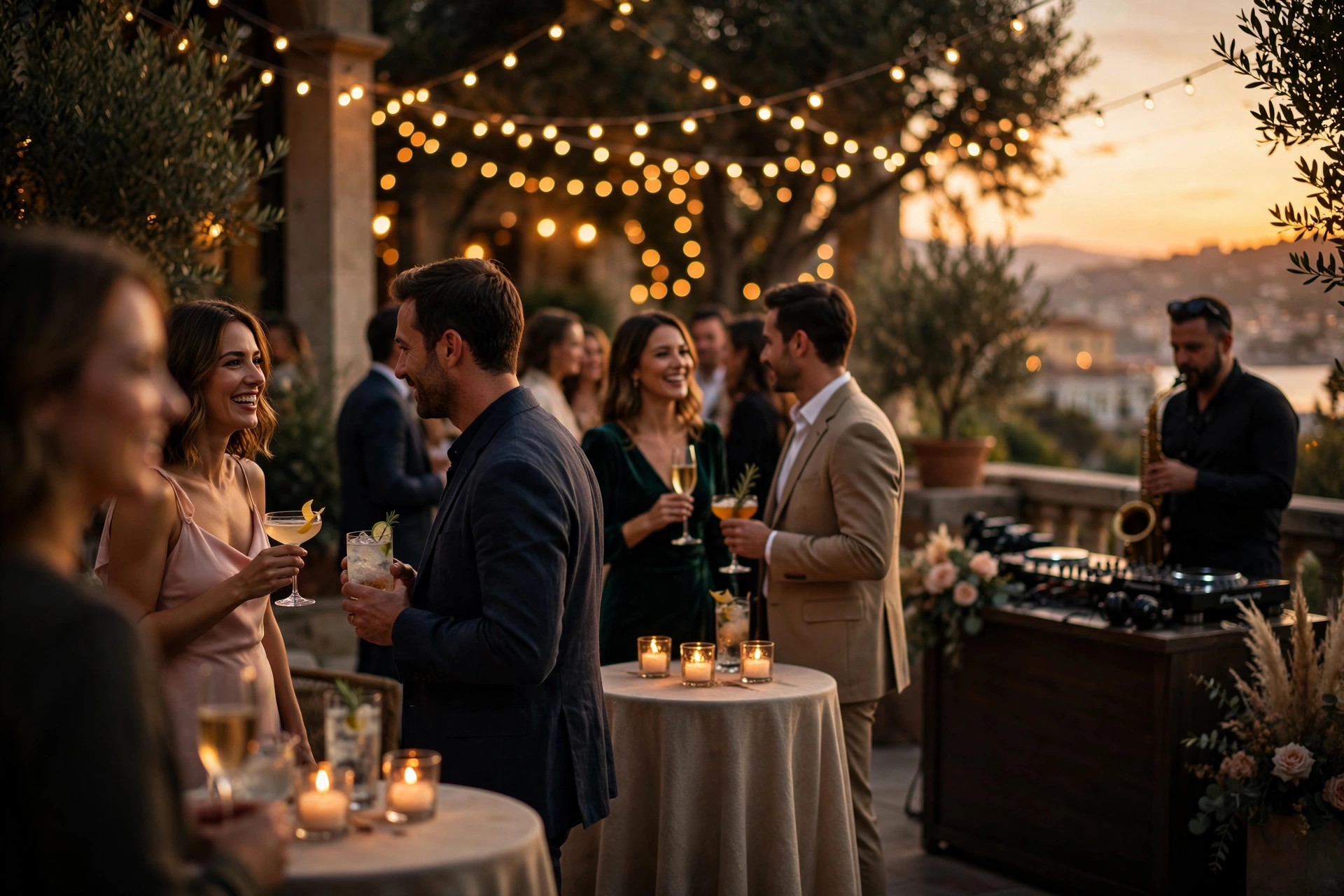
Most couples spend weeks picking their first dance song and approximately eleven minutes thinking about cocktail hour and dinner music. But here's the math: your DJ plays about 4–5 hours of reception music, and only half of it is dance music. The rest — cocktails, dinner, transitions — is the soundtrack your guests actually remember living inside. This is the part of the night that decides whether your wedding feels like an event or a party someone's phone could have run.
Cocktail hour: the warm-up act
Cocktail hour is your guests' first impression of the whole reception. They've been sitting through a ceremony, they're holding their first real drink, they're finding their people. The music should feel like an exhale — upbeat enough to lift the mood, relaxed enough to talk over. Think modern acoustic covers, Motown, bossa nova, jazz-funk, Yacht Rock. The sweet spot is energy at a 5 or 6 out of 10: nobody's dancing yet, but nobody's checking their watch either.
The rookie mistake? Starting too loud or too sleepy. Blasting Top 40 at 5:30pm while guests are greeting your grandmother kills conversation. Playing nothing but slow strings makes the hour feel twice as long. Your DJ should be reading the room during cocktail hour just like during the dance set — if the energy dips, the music nudges it up.
Dinner: the long middle game
Dinner music is background — and that's the whole point. Volume stays low enough that a toast microphone works and table conversation flows. Genre-wise, this is where your personality gets to shine without hijacking anything: classic soul, folk, Rat Pack-era crooners, soft indie, instrumental hip-hop, even a little Sinatra if that's your family's thing. One rule that never fails: no sing-along anthems during dinner. The second guests start belting out lyrics, conversation dies and the energy peaks too early. Save the bangers for when they belong — with drinks raised and shoes off.
Dinner is also where pacing happens. A good DJ uses this hour to build: starting mellow while salads land, then slowly raising tempo through the courses so that when the dance floor opens, it feels like a natural escalation — not a jarring gear change. That ramp is invisible when it's done right, and painfully obvious when it's not.
The transitions everyone forgets
The small moments are where music does its quietest work:
- Grand entrance to first dance: the handoff should feel seamless, not like someone hit "next" on a playlist
- Toasts and speeches: short musical beds under introductions, silence exactly when the mic goes live
- Cake cutting: one fun 60-second song — your guests don't need a concert
- Opening the dance floor: the first three songs after dinner decide the whole night's energy
How to brief your DJ (the easy version)
You don't need a 200-song playlist — you need vibes. Give your DJ three things for each segment: a genre or two you love, one you don't, and 3–5 songs that nail the mood you're picturing. "Dinner: soul and Motown, no country, and we love the vibe of At Last and Ain't No Mountain" tells a good DJ everything they need. Then trust them to fill the gaps — that's literally the job. We plan all of this with you in a pre-event call, so nothing about the night's flow is left to chance.
The straightforward take
A wedding's music isn't the dance floor — it's the whole arc. Cocktail hour sets the mood, dinner builds it, and the dance floor cashes it in. Couples who plan all three get a reception that feels effortless from the first drink to the last song. Couples who only plan the dancing get a great 90 minutes and a forgettable three hours around it.
Our wedding package is $995 for 5 hours — professional DJ + MC, premium sound, lighting, custom playlists, and live requests, with your full night's flow planned in a pre-event call. See what's included in the $995 package or check your date — serving Chicagoland, and Saturdays go first.